Category Archives: Author talk

Plan to Attend BWW Upcoming Author Speakers

In 2026, BWW is celebrating America’s 250th anniversary of the signing of the Declaration of Independence by inviting prominent authors to speak to us about the craft of writing and researching their books covering different periods of American history. Each author offers new perspectives and insights on what happened, how and why. We are grateful for this exciting lineup of speakers. All talks will be presented at Barrington’s White House. Mark your calendars!

Scott Ellsworth, Sunday, April 12
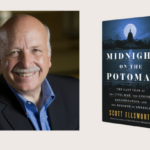
Author Scott EllsworthScott Ellsworth is author of “Midnight on the Potomac: The Last Year of the Civil War, the Lincoln Assassination, and the Rebirth of America.” Doors open at 1:00pm.

Was John Wilkes Booth working with the Confederate Secret Service? Who made up the diverse coalition that helped win the war? The book has been described by one of our BWW members as: “A real page turner. It reads like a novel.”

Currently a teacher at the University of Michigan, Scott Ellsworth’s career includes working as a historian at the Smithsonian Institution, writing for the New York Times and Los Angeles Times, as well as authoring four other books.

Patrick Griffin, Saturday, June 13

Author Patrick GriffinPatrick Griffin is author of “American Leviathan: Empire, Nation, and Revolutionary Frontier.” Doors open at 9:00am.

What did the American Revolution fundamentally change between individuals and their relationship to society? How was America’s frontier West shaped during its most formative period? Learn what your favorite cowboy movie may have gotten wrong.

Griffin is a Professor of History at the University of Notre Dame and author of four other popular history books.

Pamela Toler, Sunday, November 8

Author Pamela TolerPamela Toler is author of “The Dragon From Chicago:The Untold Story of an American Reporter in Nazi Germany.” Doors open at 1:00pm.

Toler tells the remarkable story of The Chicago Tribune’s Berlin bureau chief, Sigrid Schultz, who was one of the first reporters to warn of Hitler’s rise and the dangers of Nazism. Where did she get the courage to stand up against Hitler and tell the truth about what was happening in Germany leading up to and during WWII?

Holding a PhD in History from the University of Chicago, Toler is the author of ten popular history books. She asks her readers to look at the world today with a slightly different lens.

As mentioned above, all talks will be held at Barrington’s White House. There’s no need for BWW members to register but please let your Program Chair know if you plan to attend and if you have questions you’d like the author to address. A public event will follow each BWW talk and members are welcome to attend at no cost.

Feel free to share this post and invite friends and family and other guests to the author public event. Guests can learn more and purchase tickets through this link: https://www.barringtonswhitehouse.com/events/
Sara Paretsky on Characters, Craft, and Courage

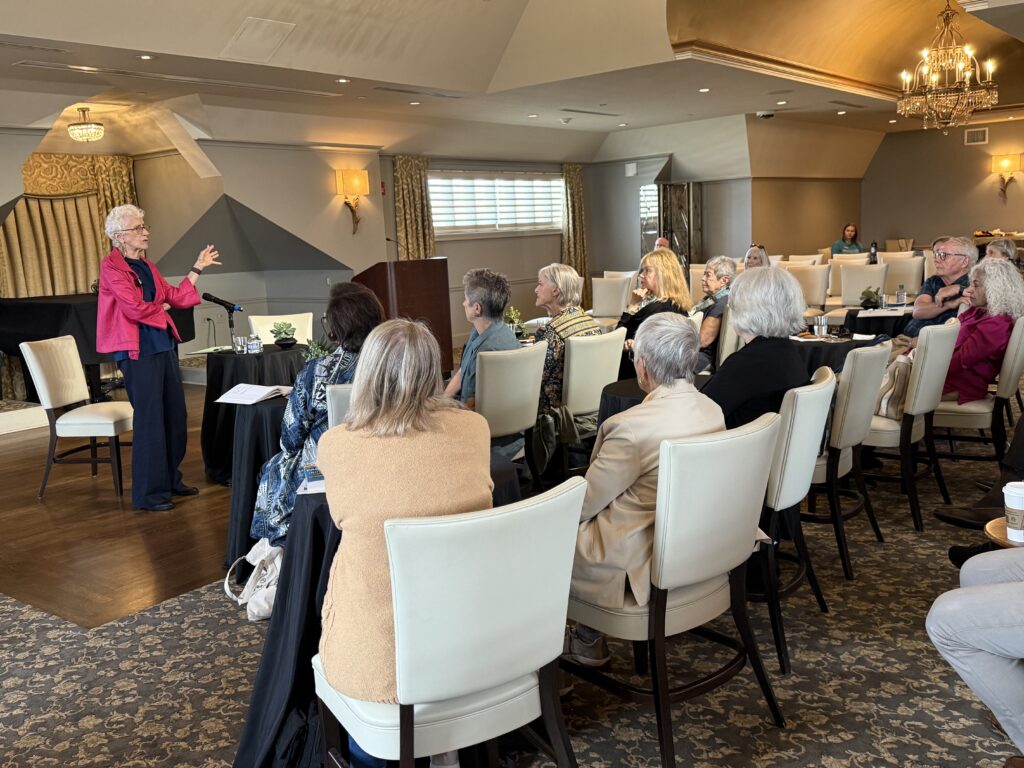
Sara Paretsky at Barrington White House

Author Sara Paretsky at Barrington’s White House

By Mary Klest

Sara Paretsky’s unforgettable character V.I. Warshawski along with twisted plots, intriguing settings and social commentary landed her on the New York Times best seller list. Her fearless female private investigator first appeared in Paretsky’s debut novel Indemnity Only in 1982. That launched a crime series that includes 22 books, the most recent being Pay Dirt.

Paretsky revealed her current work in progress features a different female protagonist named Lilly. What? The announcement was just one of many candid moments. Below are questions posed by BWW members during the Q&A, based on my notes and recollection.

BWW: Do you know how your book will end when you begin to write?

No. She knows the crime and some of the details, but not the ending. She lets that unpack itself as the story grows.

BWW: You wrote in a blog post that your characters take control and you bring them to life. What did you mean?

Paretsky laughed as she explained how a side character can become more important than she had originally conceived. She shared some examples from her books. Her real-life acquaintances may slip into her fiction as poignant characters.

BWW: Do you set up plot points?

No, instead she keeps track of her characters and chapters with artist sketch pads. “I’m like a tennis player who waits for the ball to come to me.” Her recent books are longer, with more intricate plots. “I’m a slow thinker and fast writer,” she said. In between novel writing she writes short stories.

BWW: What is your edit and review process like?

She described it as a meticulous and time consuming process. It lets her know when a story is not working. Her late husband had always been her first reader. She misses his support. For one book, she cut 200 pages during the review process. She added: “It’s hard to get the language right. Using contemporary slang will date the book.”

BWW: Do you have a favorite of your books?

She favors her third book, Killing Orders, inspired by her grandmother’s immigrant story. She also favors her 13th book, HardBall as it is based on her first summer in Chicago that she said changed her life. She admitted: “All my books have strengths and weaknesses.”

BWW: Where do you find ideas for the crimes in your stories?

She draws from her experience working at insurance company CNA. She keeps an eye on contemporary stories, focusing on white-collar crime. One crime story grew out of a Wall Street Journal case she found compelling.

BWW: Do you have relationships with cops, detectives?

Some, but her focus is white collar financial crime. “If I don’t understand it, I won’t write it.” She described her work as fantasy, not how-to. She once created an imaginary country for a book rather than risk inaccuracies about a real one.

BWW: Is there a particular day or time you write?

She once thrived writing between 8:00pm and midnight but sleep issues may change that routine.

BWW: What authors do you like to read?

She praised Hilary Mantel’s Wolf Hall as “a perfect novel.” She also mentioned George Elliot, Jane Austen, and Louisa May Alcott among her favorites.

From Process to Principle

In contrast to the informality of the BWW session, Sara Paretsky’s public talk was carefully crafted. Reading from prepared notes, she began with her writing process, then moved to the influence of culture on a writer’s ability to remain true to their work.

Paretsky spoke passionately about the importance of free expression. She warned against censorship, recrimination, and intimidation. She stayed in her lane as a writer, delivering thoughtful, reasoned ideas. She talked about the impact book banning in libraries has on writers and cautioned against the danger of self-censorship. What harms a writer’s voice can harm all of society by limiting the free flow of ideas.

During these polarized times, I worried that her comments might offend someone in the audience. But when Sara Paretsky finished her talk, applause filled the room and the audience rose in a standing ovation. It was as if they had been waiting for someone to say what they themselves were thinking.

It reminded me of what courage it takes to be a writer.

###

“Listening to Sara Paretsky’s insights about her writing process was like having a seat in a master class. Her candor and forthcoming anecdotes about storytelling – including the nuts and bolts of her practice – were delightful, endearing and inspirational.” – Vicki Atkinson, BWW member

“I thoroughly enjoyed both parts of Sara Paretsky’s presentation. Her remarks were engaging and energizing to me. On the topic of free speech, I found her remarks both hopeful and brave. She spoke her truth clearly without getting political or resorting to name calling. I was glad I attended.” – Trudy Kleckner, BWW member


Is AI a Threat or Opportunity for Writers?

What are the limits and potential of artificial intelligence (AI) for writers? Author, educator and Chicago Tribune columnist John Warner spiked his talk with straight answers to questions writers around the world are asking. He was at Barrington’s White House as part of BWW’s speaker program. What is AI? Warner describes it as a syntax generator, programmed to be good at inserting words based on probabilities. “It can’t think, reason or feel,” he says. “AI is not capable of judging accuracy or truth. It can’t form a world view or communicate with intention.”

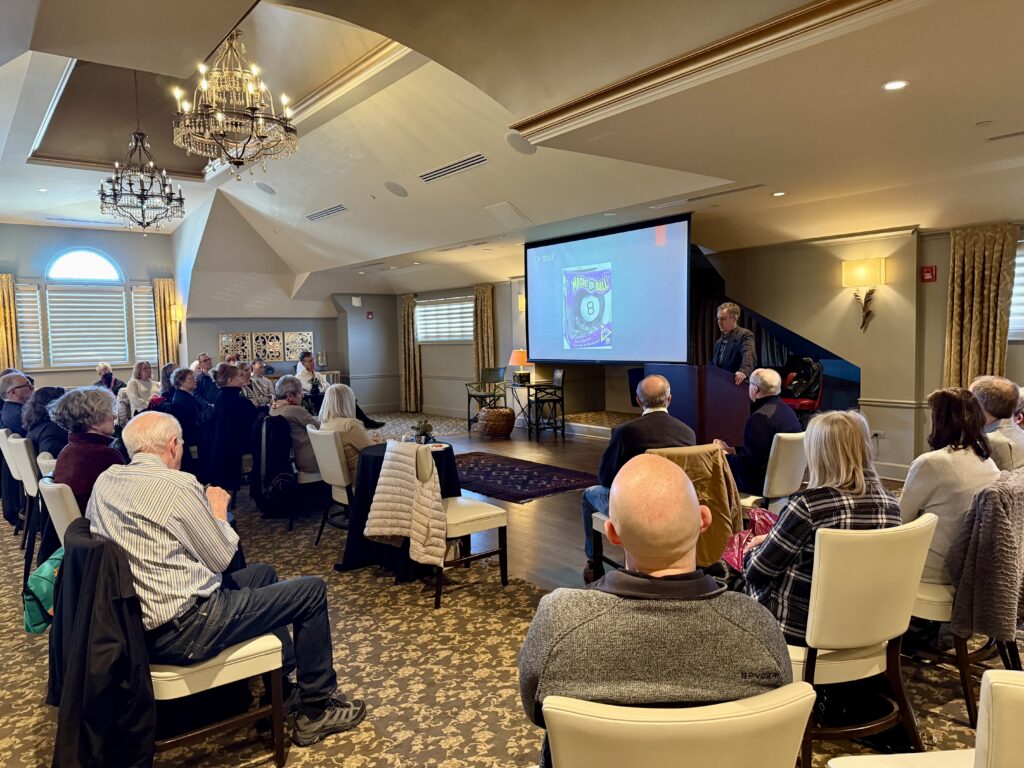
Author John Warner at Barrington White House

Author John Warner at Barrington White House

He gives BWW members assurances by saying, “Only humans write.” That’s because writers engage in a process based on artistry and wisdom, not algorithms. “Writing is thinking. It’s an idea, not a sentence,” he says. “Expressing and exploring an idea requires feeling and experiencing the world. Thinking is what shapes values and constructs a world view.”

AI can help writers with research, editing, word choice, location descriptions, and more when it’s used as a tool, not a replacement for a writer’s work. Learning how to prompt AI models with specific commands can be a real asset to writers.

Warner sees more advantages of being a human writer or having a writer in the room. Humans are endowed with “sensory capacity, experiences, memory, reflection and meta cognition that assesses meaning and importance.”

Giving Way to Choice

Recent shifts in literacy towards videos, TikTok and Substack allow people to share their passions directly with an audience. When algorithms direct the person to the next content, it’s infiltrating a person’s choice to determine what’s next for themselves. This is something to be aware of. He warns, “Life under algorithms divorces ourselves from our own tastes.”

A trend in traditional media is banking on only what sells. Warner encourages writers to prioritize their unique intelligence, individual interests, tastes, and experiences. “Process over product. Trust yourself,” he says.

More interesting ideas to ponder during his talk include these:

“Possessing volumes of data is not expertise.”

“We have agency. We can resist implementing something we didn’t ask for.”

“AI is like a coach who knows the score, but didn’t watch the game.”

BWW member Ed Plum describes the Warner program this way: “One of the most engaging and encouraging programs of BWW. The session laid out the limitations and possibilities of AI. I found the afternoon affirming, thought provoking, and left me determined to finish my book by June.”

Editor Note:  OpenAI CEO Sam Altman recently released a story online written by a newly trained AI model. He thinks it is a good example of creative writing. Many of the online comments criticize the piece as “elegant emptiness” and “poorly written”. The most interesting comment I read: “As soon as readers know it is written by AI, they disconnect emotionally.” I find this to be true. With machines, I feel manipulated. With another human, I feel empathy, connection, inspired. John Warner helped those in the audience understand why this is so.

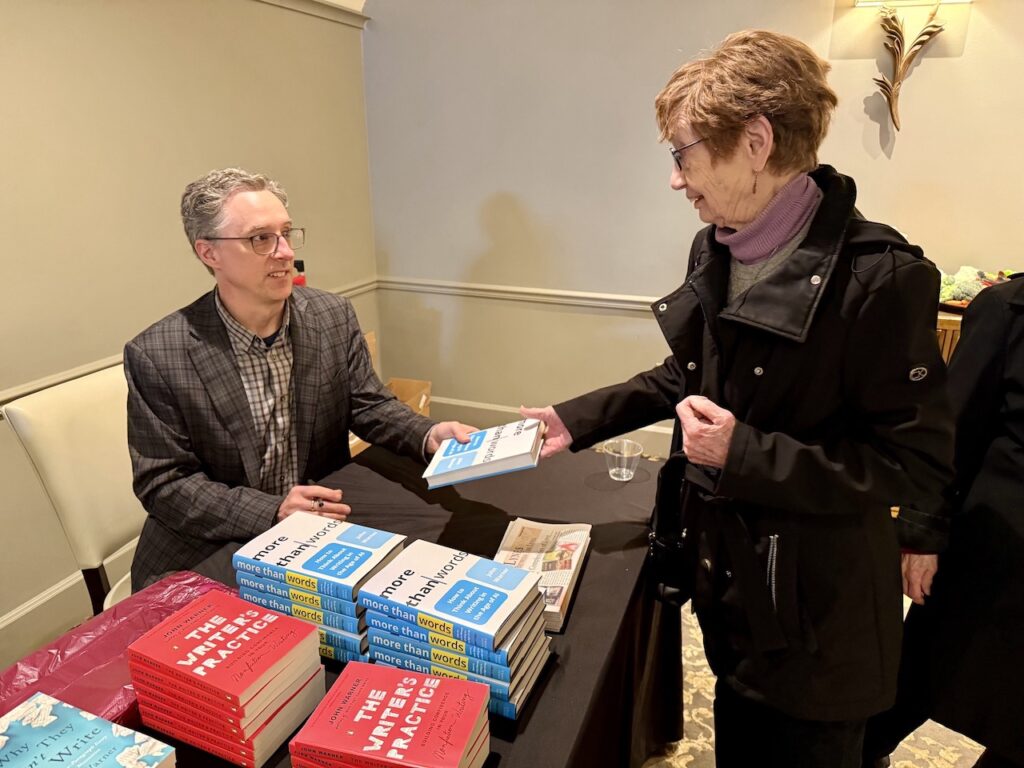
Author John Warner book signing

Book signing by John Warner at the end of his talk.

BWW Announces 2025 Speaker Lineup

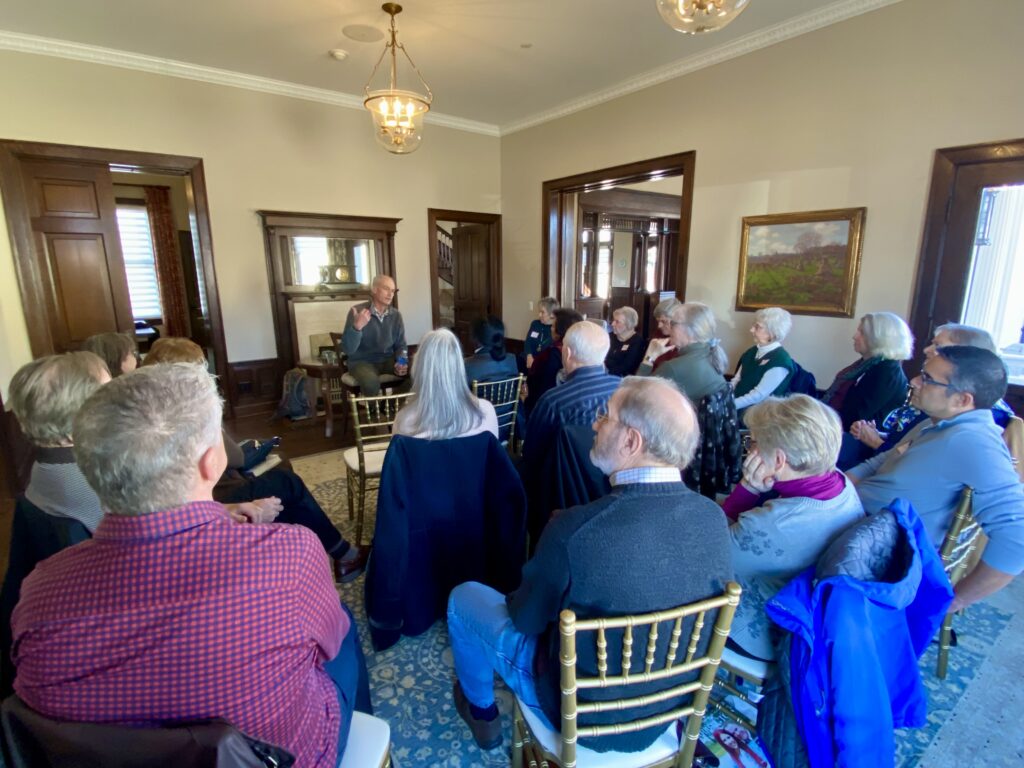
Intimate BWW speaker setting at Barrington White House

An intimate speaker setting at the Barrington White House.

The lineup of our 2025 BWW speakers is here! Mark your calendars, get background on the authors through the links below, and show up for some fascinating insights from these engaging authors. In addition to the workshops at the Barrington White House, BWW members may attend the public portion following the workshop free of charge. Please spread the word about these events!

John Warner, Sunday,  March 9, 2025, Barrington White House

An author, editor, Chicago Tribune columnist and teacher John Warner will discuss publishing trends, craft skills, and writing in the age of AI. Here’s a link to his page: https://redbrickagency.com/john-warner/. Warner is a weekly columnist for the Chicago Tribune, writing about books and the habits of reading at “The Biblioracle.” White House doors open at 1:00pm. BWW talk begins at 1:30pm. Public session starts at 3:00pm.

Libby Fischer Hellman, Saturday, June 7, 2025, Barrington White House

Libby Fischer Hellmann writes thrillers. With seventeen novels and twenty-five short stories published, she has also written suspense mysteries, historical fiction, PI novels, amateur sleuth, police procedurals, and a cozy mystery. To read more about her: libbyhellmann.com. White House doors open at 9:00am. BWW talk begins at 9:30am. Public session starts at 11:00am.

Sara Paretsky, Sunday, September 14, 2025, Barrington White House

Ms. Paretsky is a best-selling novelist, non-fiction and short story writer who will talk with us about her writing process. Here’s a link to her website: https://saraparetsky.com/ Her latest book Pay Dirt, continues her beloved V.I. Warshawski novel detective series.  White House doors open at 1:00pm. BWW talk begins at 1:30pm. Public session starts at 3:00pm.

Thanks to our collaboration with Read Between the Lynes bookstore, author books will be available for purchase and signing at the events.

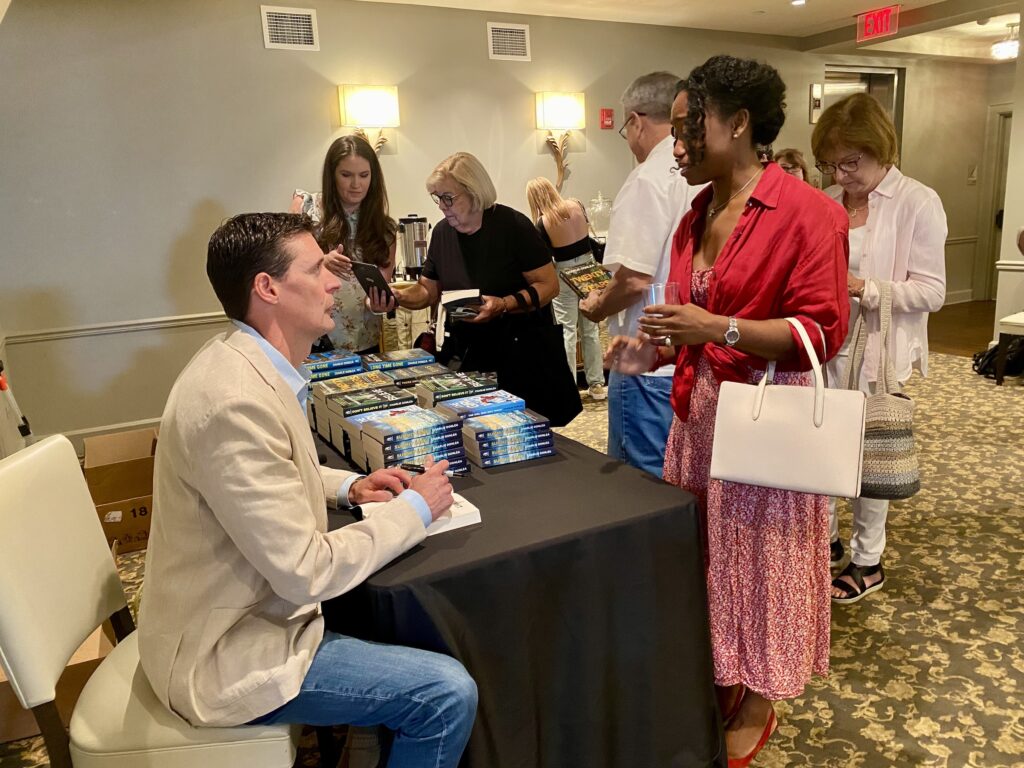
BWW book signing at Barrington White House

Book signings follow author talks.

 Fifth Tuesday speaker bonus

The BWW speaker program will also include speakers at two of our Fifth Tuesday meetings that begin at 9:30am at the Barrington Area Library. Speaker talks start at 10:30am.

 Dr. Elizabeth Trembley, April 29, 2025, Barrington Area Library

A retired English professor and engaging speaker Elizabeth Trembly writes graphic novels and memoir. Here’s a link to learn more about her: https://hope.edu/directory/people/trembley-elizabeth/index.html.

April Nauman, July 29, 2025, Barrington Area Library  

April Nauman is the author of Down the Steep set in the Civil Rights era. She’s published several interesting essays: “Confessions of an Arrogant and Humble Writer” and “6 Tips for Jumpstarting a Stalled Writing Career.” Here’s a link to her website: https://adnauman.com/.

We hope you will enjoy learning from each of these speakers. If you have questions or topics you’d like the authors to address let us know through your manuscript chairperson or leave a comment below.


Raymond Benson, From James Bond to Next Door

Raymond Benson at Barrington White House

Raymond Benson, Barrington White House

Suspense writer Raymond Benson is most notably famous for writing 007 James Bond novels, but he is also known as the author of a five-book serial, The Black Stiletto and most recently a mystery novel inspired by an empty house next door to his The Mad, Mad Murders of Marigold Way. He started his talk with Barrington Writers Workshop members at Barrington’s White House saying, “There are no rules.” With that he shared what works for him as a writer.

Planning

He’s a plotter, a planner, an outliner. He wants to know how his stories end before he begins. He builds his outline with a concept, an idea in mind, based on what interests him, what’s going on in the world, or ideas that just pop into his head.

“I write an outline in block paragraphs describing what happens in each chapter. I can move the blocks around if I need to.” This usually takes him two months to write. He also recommends writing a blurb paragraph on what the book is about to stay focused and act as reference.

Setting

Some of his research focuses on the location where the story will take place. This could be the house next door or hotspots in the world that might be of interest to his audience. Once he settles on a location, he learns about it, contacts possible sources and often visits the place. “If unable to visit, Google maps can put you in a place virtually.”

Plot

To develop a plot, he thinks about who would be upset about the situation he’s created in the story. Who has stakes in the game?

Daily Goals

When he’s ready to write, he relies on his outline and sets daily goals. “I complete a chapter from beginning to end each day.” He puts it aside then reads it later that night and edits it. “Fix it. Don’t rewrite,” he says. This daily effort goes on until a first draft is finished. This is the pace he has established. “Keep your story moving at your own pace,” he says.

Action scenes

Being a suspense writer, action scenes are important to Benson. “Action is tough. Write one sentence at a time. Bit by bit, in moments, add emotions. At a key point, move fast, then slow the motion. Add sensory details. What does the character see, feel, hear?”

Revisions

After letting some time pass, Benson suggests taking a fresh look at your work. “You know where you’re going. Plug in foreshadowing, a gripper first sentence or striking first paragraph. Imagine actors playing out the scenes.”

Beta readers

Finding good beta readers can be a challenge for writers. Benson first relies on his wife. “I trust her and know she will point out areas that need work.” He chooses other beta readers based on their tastes, intelligence, expertise on a subject, what they read, and if they have a good eye.

When his work is completed, it is then scrutinized by his agent and a publisher editor.

A note about The Bond Phenomena

For those who weren’t able to attend the public talk at Barrington’s White House, Benson did reveal how he was selected to be the first American to write original James Bond novels. In 1984 Raymond Benson wrote The James Bond Bedside Companion. He dedicated the book to Ian Fleming. In it he describes and shares his knowledge of all things Bond. Since he was very familiar with the world of Bond, he became one of the successive writers to continue the legacy. Between 1997 and 2002 Benson wrote six Bond books.

BWW members were thrilled with Raymond Benson’s talk and very much appreciated all that he shared with us. You can order his books and read reviews at his website: https://raymondbenson.com/


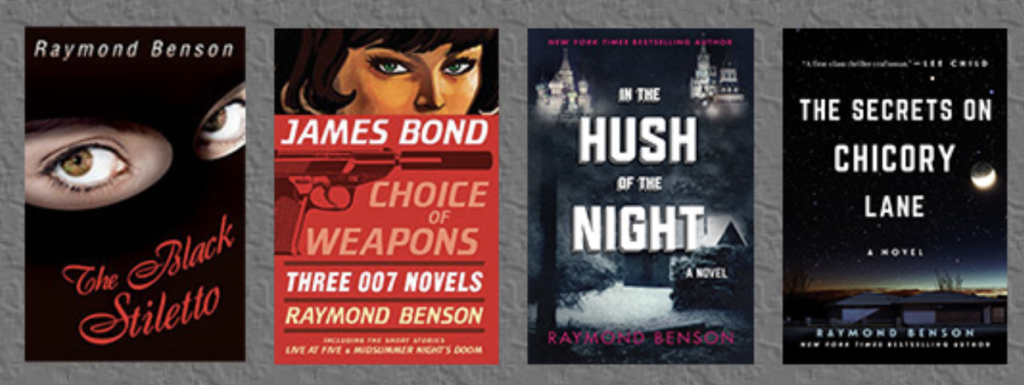
Books by author Raymond Benson