Tag Archives: Author talk

Author Pamela Toler Shares The Dragon From Chicago Story

By Janet Souter

Pamela Toler

Author Pamela Toler

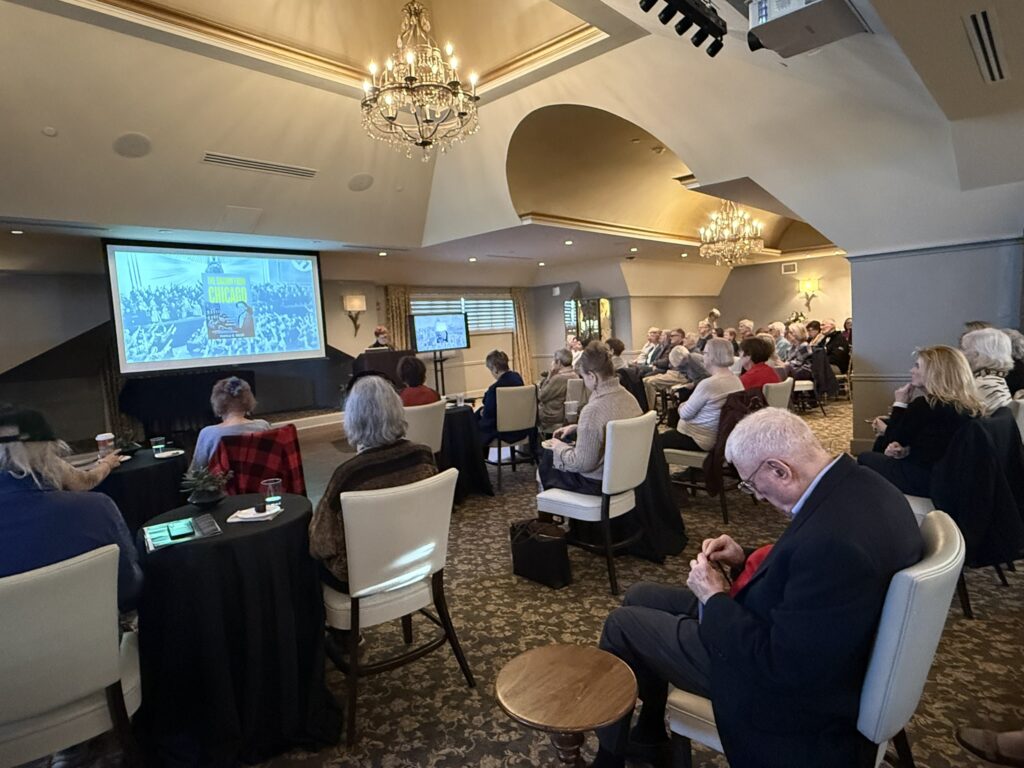
Barrington Writers Workshop members, along with a large public audience, were treated to another dynamic, engaging speaker on Sunday, November 8 at the Barrington White House.

Dr. Pamela Toler, author of The Dragon from Chicago: The Untold Story of an American Reporter in Nazi Germany revealed how she was inspired to write the biography of Sigrid Schultz, a Chicago Tribune reporter who eventually took over as Berlin bureau chief for the newspaper during the years leading up to World War II.

According to Dr. Toler, Sigrid Schultz interviewed Adolf Hitler as the Nazis were gaining strength and often conversed with Hermann Göring, the second most powerful official under Hitler. It was Göring who nicknamed her “the Dragon from Chicago,” after she stood up to him during a confrontation at a social event in Berlin. Hence, the book’s title.

Sigrid spoke several languages, including German, French and Norwegian, knowledge which set her apart from many other American reporters in Berlin. In the early days of the Third Reich she found sources among other foreign journalists and friends who met in restaurants or dark streets late at night to compare notes. As time went on, she often risked her life in the interest of exposing the truth about atrocities committed under Hitler’s regime. At one point Nazi officials who had monitored her phone calls became angry when they learned the Tribune had asked her for details on a Hitler-ordered massacre known as the June Blood Purge. Schultz had no choice but to file the story from Paris under a pseudonym. Dr. Toler finished her presentation with a moving tale of Schultz’s 1945 visit to a Nazi death camp, during which the reporter spoke with and comforted several prisoners, many with only days to live.

As with other authors who have presented at BWW’s speaker series, Dr. Toler spent an hour with BWW members discussing her writing process, including how she organizes her extensive research sources and where she finds the little-known stories that help engage the reader and bring her subjects to life.

At first, Toler found she was forced to be flexible in the research process for The Dragon from Chicago. She received the book contract from Beacon Press on March 20, 2020—the start of the Covid pandemic. Since she couldn’t access hard copy files in libraries and museums, she managed to have archivists hold documents up to the Zoom screen so she could photograph them. Most of the Schultz memoir material was at the University of Wisconsin Madison, so when Dr. Toler could once again search in person, her husband drove her up there.

And speaking of research, Dr. Toler noted that detours in research can also add texture to a story, including memoirs written by others. She found one interesting piece of literature at the Newberry Library—a magazine that came out in the 1920s aimed at people travelling to Europe between the world wars.

As she constructs her manuscripts, Toler uses Scrivener for outlining, storing visuals and research. She labels exact quotes from other writers by color to avoid slipping into unintended plagiarism.

And speaking of organizing, Dr. Toler advises writers to avoid going back and forth in time, especially when it comes to nonfiction. It’s too easy to lose track of what happens in which order. In other words: “Abandon chronology at your own peril.”

Dr. Toler is already on her way to her next book, and although not ready to reveal the subject, we can be sure she’ll give the world another amazing tale of a vibrant historical figure or period.

Those who want to learn more about little known tidbits of history can subscribe to Dr. Toller’s emails. To sign up visit her web site www.pamelatoler.com
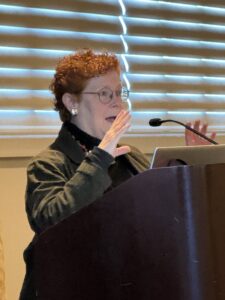
Pamela Toler, author of The Dragon From Chicago

Author Pamela Toler speaking at Barrington’s White House.
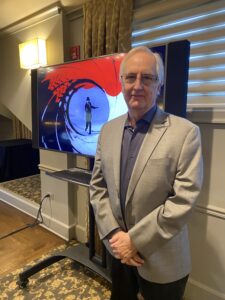
Raymond Benson, From James Bond to Next Door

Raymond Benson at Barrington White House

Raymond Benson, Barrington White House

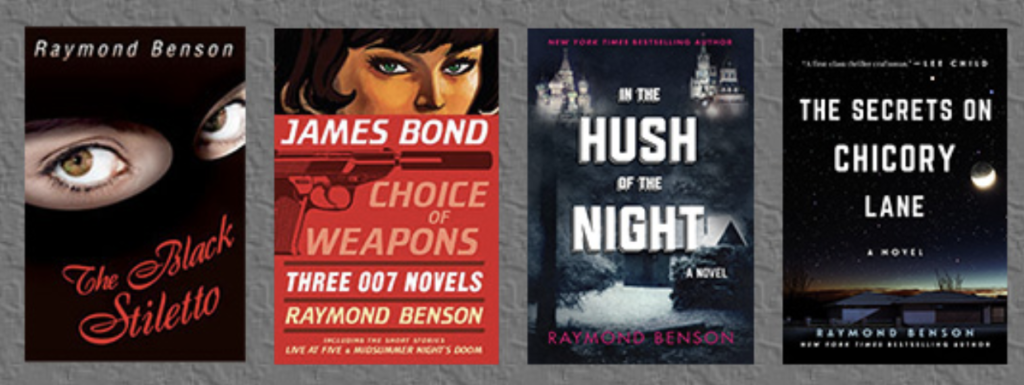
Suspense writer Raymond Benson is most notably famous for writing 007 James Bond novels, but he is also known as the author of a five-book serial, The Black Stiletto and most recently a mystery novel inspired by an empty house next door to his The Mad, Mad Murders of Marigold Way. He started his talk with Barrington Writers Workshop members at Barrington’s White House saying, “There are no rules.” With that he shared what works for him as a writer.

Planning

He’s a plotter, a planner, an outliner. He wants to know how his stories end before he begins. He builds his outline with a concept, an idea in mind, based on what interests him, what’s going on in the world, or ideas that just pop into his head.

“I write an outline in block paragraphs describing what happens in each chapter. I can move the blocks around if I need to.” This usually takes him two months to write. He also recommends writing a blurb paragraph on what the book is about to stay focused and act as reference.

Setting

Some of his research focuses on the location where the story will take place. This could be the house next door or hotspots in the world that might be of interest to his audience. Once he settles on a location, he learns about it, contacts possible sources and often visits the place. “If unable to visit, Google maps can put you in a place virtually.”

Plot

To develop a plot, he thinks about who would be upset about the situation he’s created in the story. Who has stakes in the game?

Daily Goals

When he’s ready to write, he relies on his outline and sets daily goals. “I complete a chapter from beginning to end each day.” He puts it aside then reads it later that night and edits it. “Fix it. Don’t rewrite,” he says. This daily effort goes on until a first draft is finished. This is the pace he has established. “Keep your story moving at your own pace,” he says.

Action scenes

Being a suspense writer, action scenes are important to Benson. “Action is tough. Write one sentence at a time. Bit by bit, in moments, add emotions. At a key point, move fast, then slow the motion. Add sensory details. What does the character see, feel, hear?”

Revisions

After letting some time pass, Benson suggests taking a fresh look at your work. “You know where you’re going. Plug in foreshadowing, a gripper first sentence or striking first paragraph. Imagine actors playing out the scenes.”

Beta readers

Finding good beta readers can be a challenge for writers. Benson first relies on his wife. “I trust her and know she will point out areas that need work.” He chooses other beta readers based on their tastes, intelligence, expertise on a subject, what they read, and if they have a good eye.

When his work is completed, it is then scrutinized by his agent and a publisher editor.

A note about The Bond Phenomena

For those who weren’t able to attend the public talk at Barrington’s White House, Benson did reveal how he was selected to be the first American to write original James Bond novels. In 1984 Raymond Benson wrote The James Bond Bedside Companion. He dedicated the book to Ian Fleming. In it he describes and shares his knowledge of all things Bond. Since he was very familiar with the world of Bond, he became one of the successive writers to continue the legacy. Between 1997 and 2002 Benson wrote six Bond books.

BWW members were thrilled with Raymond Benson’s talk and very much appreciated all that he shared with us. You can order his books and read reviews at his website: https://raymondbenson.com/


Books by author Raymond Benson